
Making A Kitchen That Lives as Beautifully as it Looks
There's a moment in every kitchen project when we ask our clients to walk us through a Tuesday morning. Not a holiday. Not a dinner party. A regular Tuesday. Who's making coffee first, where the kids drop their backpacks, who needs to slip out the side door at 7:15. The answers shape everything that follows.
A beautiful kitchen photographs well. A great kitchen earns its keep at 6 a.m. and again at 9 p.m., on a quiet weeknight and on the night, you have twelve people over. The difference between the two is rarely budget. It's planning.
Below are some of the things we think about most when we design a kitchen meant to be lived in not just admired.
A layout that respects how you “actually" live
A good layout is the invisible foundation of a great kitchen. We design the morning rhythm and the evening rhythm separately, then make sure they don't collide. The coffee maker shouldn't sit where your teenager parks for breakfast. The dishwasher shouldn't open into the path between the range and the refrigerator. When guests arrive, the conversation should happen “with” the cook, not behind them.
This is where luxury reveals itself most quietly. Luxury isn't always excess. More often, it's ease. The result of careful planning and a thousand small decisions made in your favor before you ever set foot in the room.
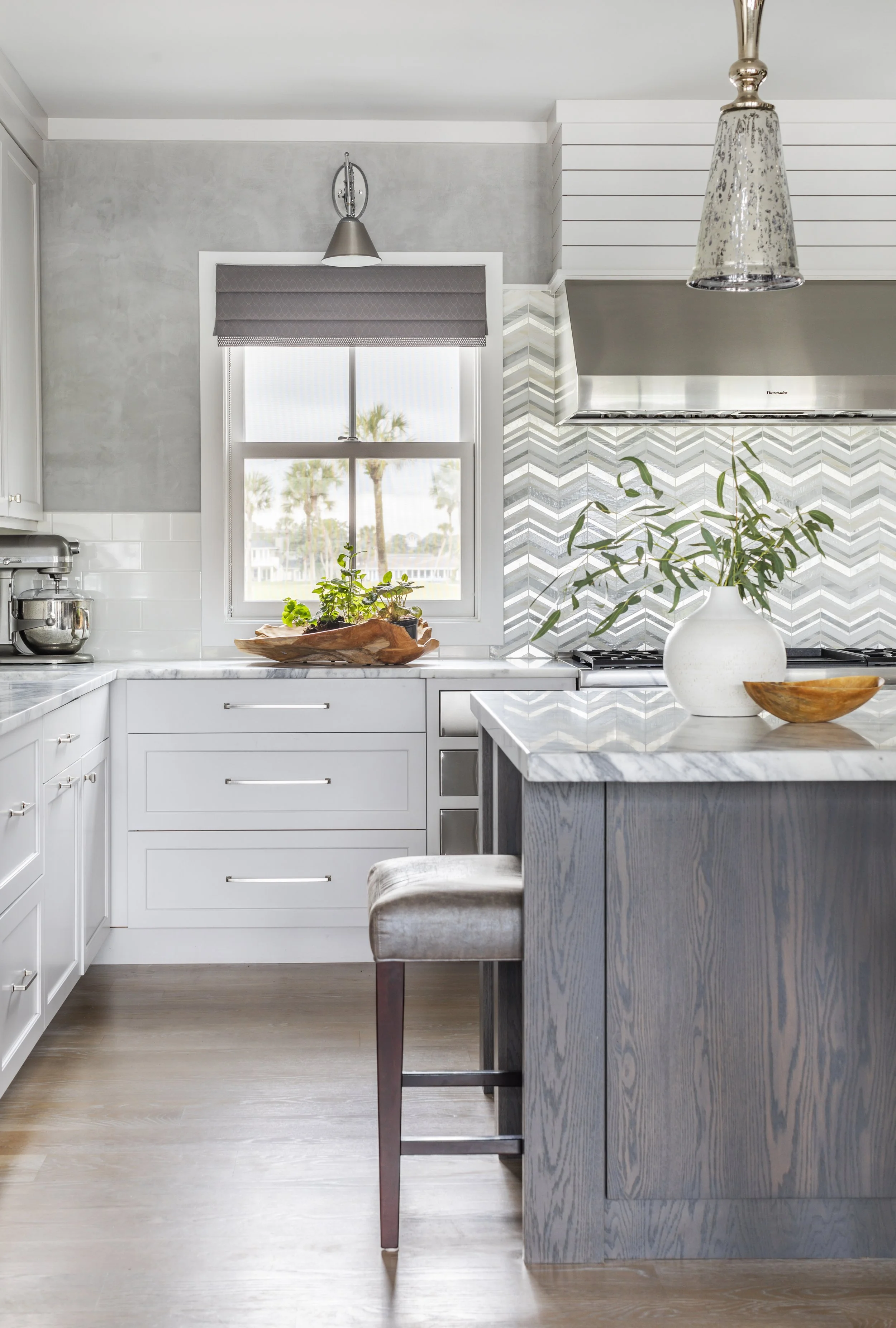
Lighting, in layers
A single overhead fixture, no matter how beautiful, cannot do the work of a kitchen. We design lighting in three layers.
Ambient light sets the mood and fills the room.
Task lighting - under-cabinet strips, well-placed pendants over the island, all make the work safe and pleasant.
Accent lighting (a soft glow inside a glass-front cabinet, a wash on a stone backsplash, a sconce above an open shelf) is what gives a kitchen depth after the sun goes down.
Outlets belong in this conversation too. We hide them under cabinets, inside drawers, tucked into the side of an island, so they disappear when you don't need them. In-counter charging pads keep phones off the prep surface. The goal is a kitchen that looks calm even when it's working hard.
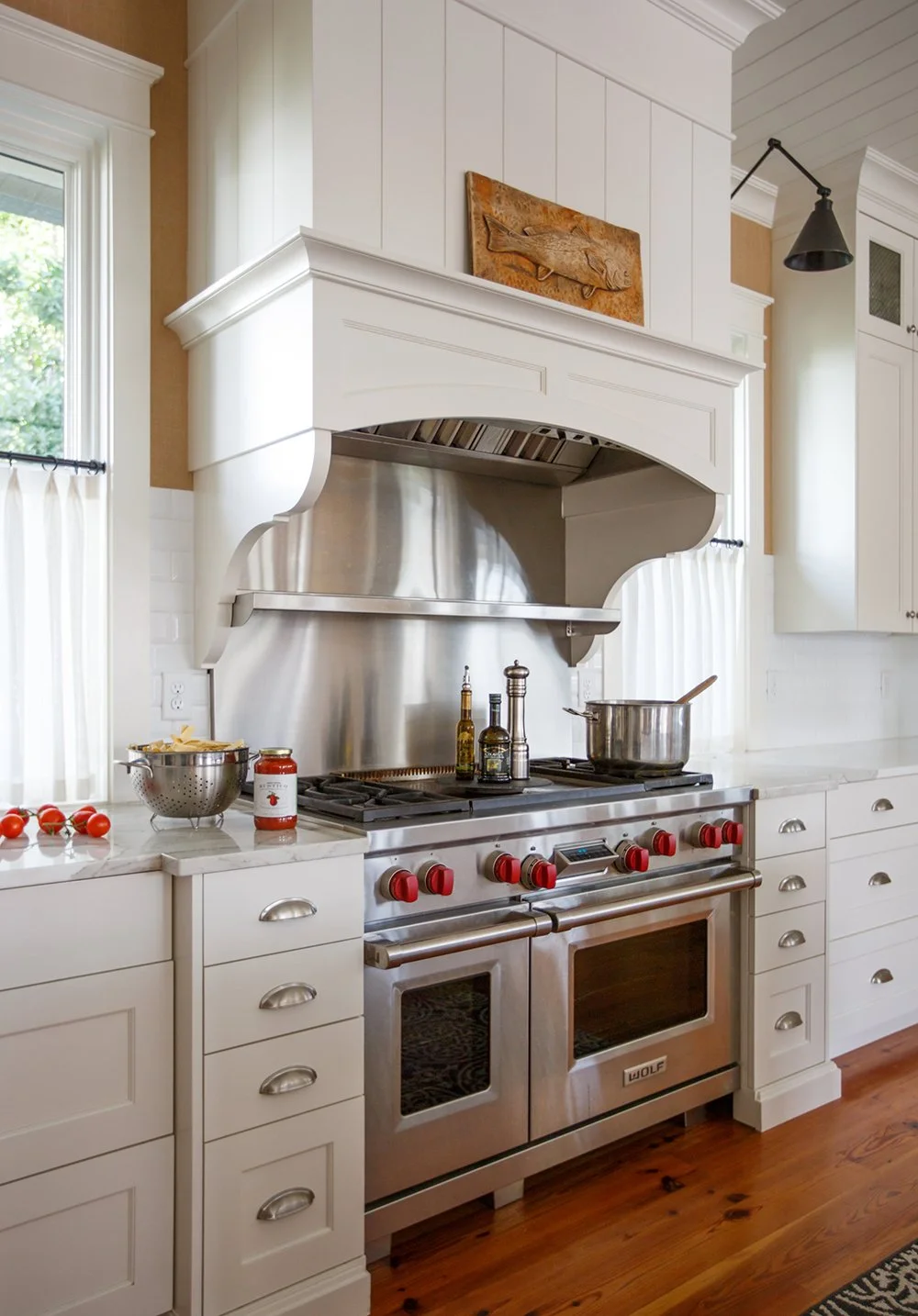
Materials that tell your story
Materials are how a kitchen earns its character. We tend to anchor a design with a quality stone or a well-chosen quartz, then introduce warmth through wood tones or color. A walnut island, white oak shelving, a rift-cut oak cabinet run will soften the room. Contrast is what keeps it from feeling flat. Stone against wood. Matte against polished. Warm brass against a cool plaster wall. Mixed metals, when done with intention, give a space a layered, collected feeling rather than a sterile one.
The materials should also tell “your” story. A surface that ages beautifully under real cooking. A backsplash that nods to a place you loved during travels. A deliberate choice that feels like you the moment your hand touches it.
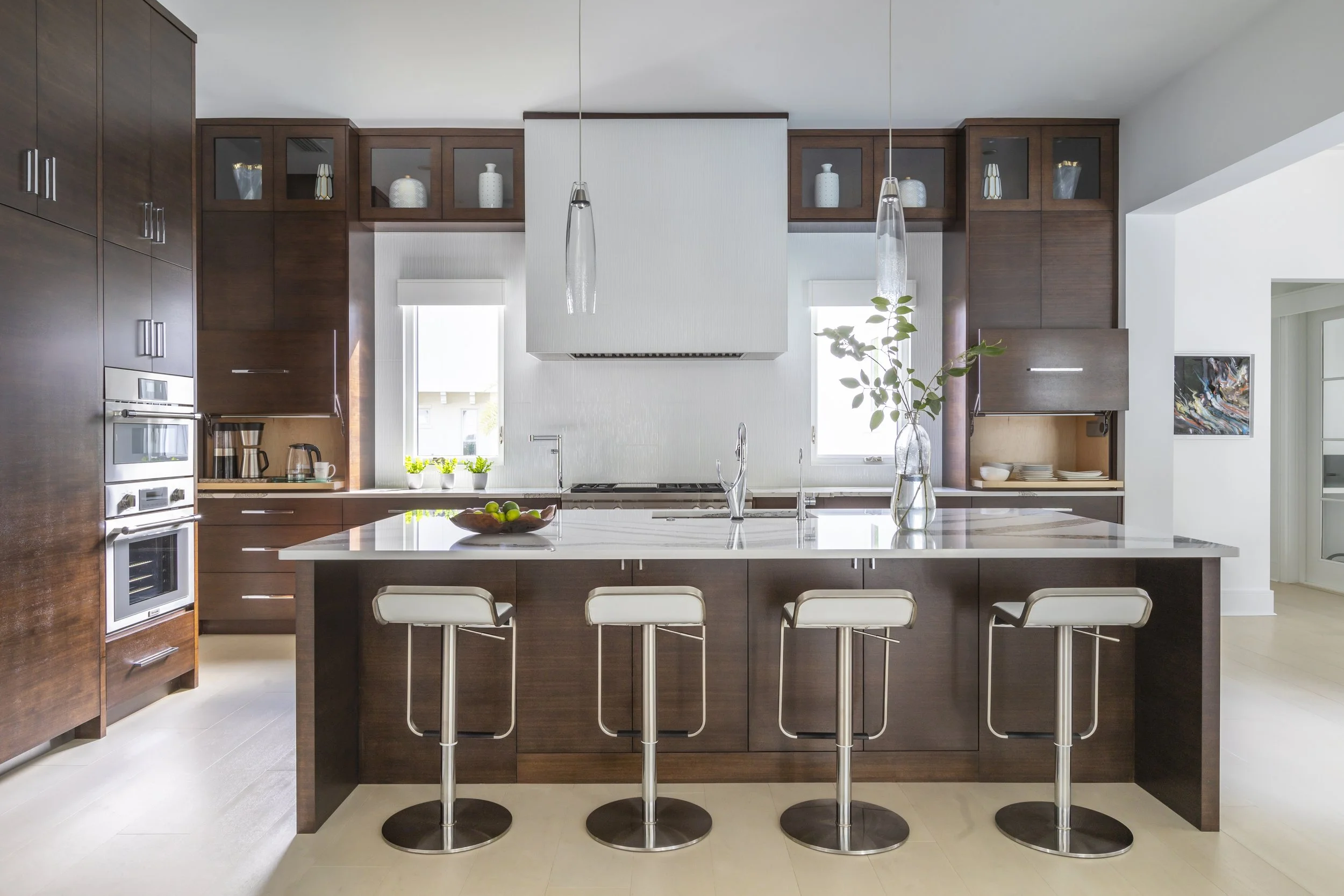
Integrated appliances, seamless function
A panel-ready refrigerator. A dishwasher that disappears into the cabinetry. A microwave drawer tucked under the counter instead of mounted at eye level. These choices keep the architecture of the room intact and let your materials do the talking.
We also think carefully about the “additional” appliances -a second dishwasher near the pantry area, a beverage drawer at the island, a built-in coffee system off the main work zone. They're placed where they're used, not where they fit. And almost always, they create a little extra convenience along the way.
The return of the scullery
One of the most-requested rooms in our recent kitchen projects is the back scullery. Sometimes called a working kitchen, sometimes a prep pantry, it's the room behind the show kitchen where the day-to-day mess lives. The small appliances, the coffee grounds, the stack of pans drying after dinner. It often adjoins the pantry, which means groceries land where they're stored and the front kitchen stays composed for the family and for guests.
A scullery isn't a luxury reserved for the largest homes. With thoughtful planning, even a modest footprint can give you the relief of a second sink, a second dishwasher, and a place to set down the chaos.
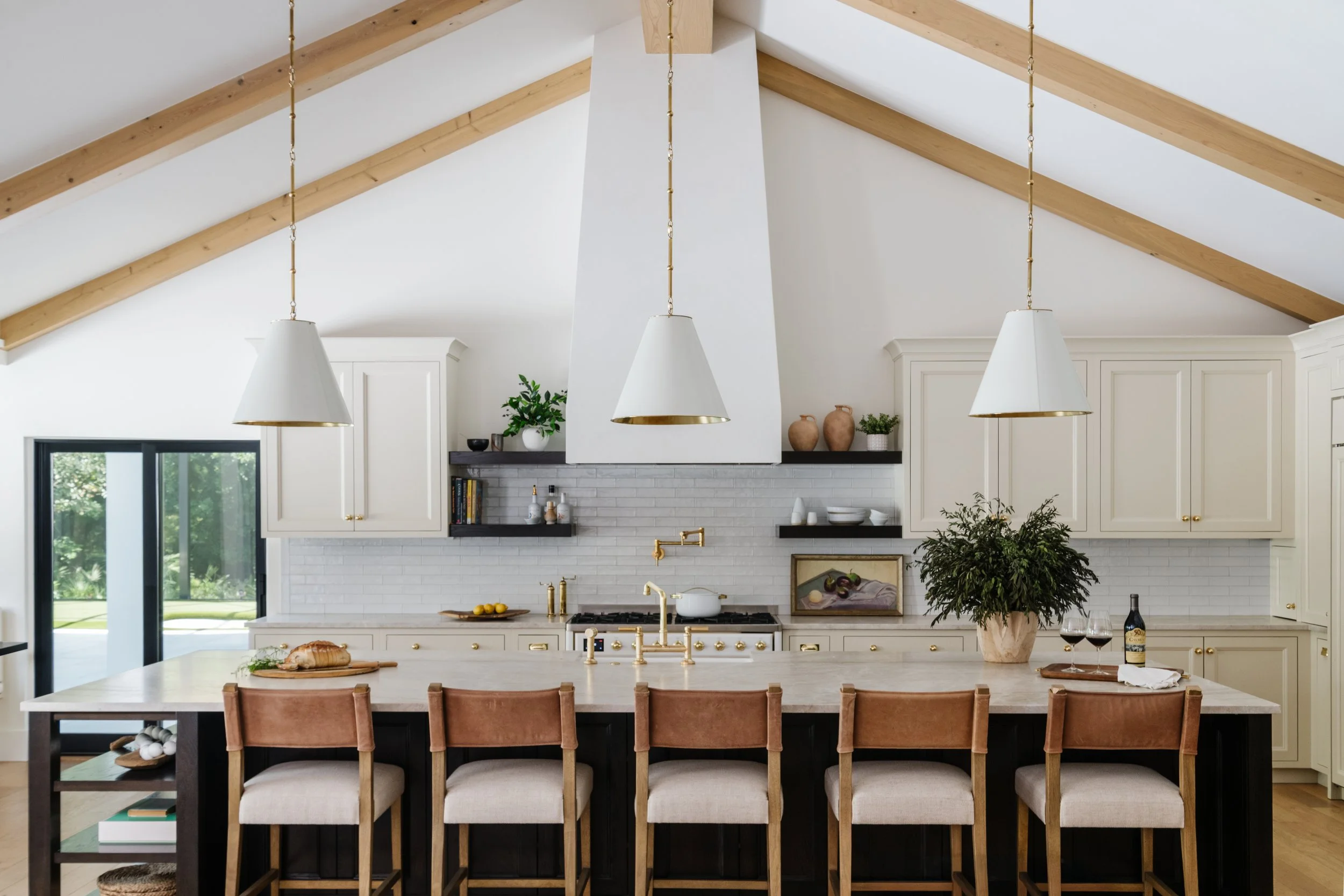
Storage that supports real life
Deep drawers instead of base cabinets, almost without exception. Vertical dividers for trays and cutting boards. A toe-kick drawer for the things you reach for once a year. Hidden outlets inside an appliance garage so the toaster lives behind a door instead of on the counter.
The most-loved storage we design is usually the most personal: a dedicated coffee station with everything in arm's reach, a smoothie area near the sink with the blender plugged in and waiting, a tucked-away bar with the right glasses behind a single elegant door. These aren't extras. They're the rituals of your day, designed for how you live.
The power of negative space
Not every wall needs cabinets. Some of the most beautiful kitchens we've designed are the ones where we held back , where a stretch of plaster, a length of stone, or a single open shelf is allowed to let your eyes breathe. Visual pause is part of the composition. So is physical pause: enough room to slip behind someone at the range, enough room for two people to load the dishwasher without choreography.
Restraint is often the most sophisticated move in a room.
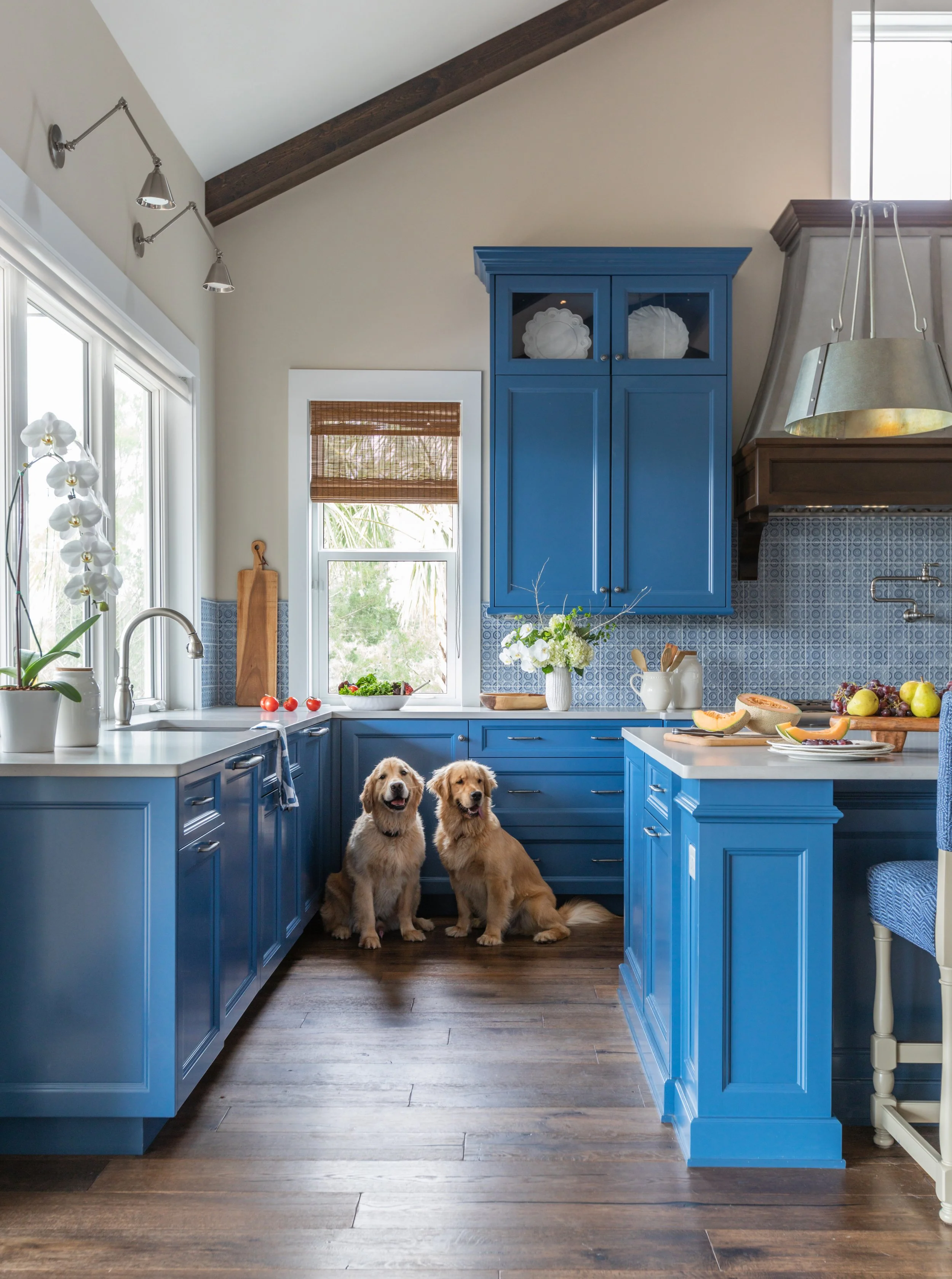
A kitchen that reflects you
At the heart of it, kitchens are deeply personal. They hold the rhythms of your family, the coffee at dawn, the homework at the island, the late dinners with friends that somehow always end up around the stove. A great kitchen makes those moments easier and stats beautiful all at once.
That's the work we love most. Walking through your mornings and your evenings, your small rituals and your big gatherings, and translating all of it into a room that feels unmistakably yours. We don't let any detail be missed because the details are where life happens.
If you're dreaming of a kitchen that lives as beautifully as it looks, we'd love to design it with you.